

What has today's scrapbooks common with scrapbooking history 400 years back?
Scrapbooking history starts already during the Renaissance period. There was an abundance of information and a passion for culture in general. Schools and libraries created a solid foundation for what was called the development of commonplace books. People started to copy phrases and poems in their own personal books.
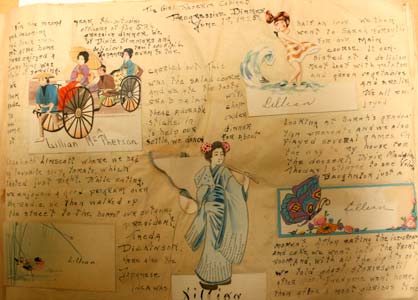
During the 1600s Giorgio Vasari Italy, released a book with recommendations to save the scriptures, texts and drawings by placing them in albums. It was more or less a standard in Europe and served as a guideline for library and museum.
In 1706 published the philosopher John Locke, a manual on how to create Common-Place Books. This manual laid down the path for our time journaling, and is a very central part of scrapbooking history.
Direct forerunner to today scrapbook Founded in England in 1769, when William Granger published his work with additional illustrations as an appendix. He added also at a later time, blank pages which readers could themselves bring their own personal items. These books were very popular during the 1800s.
In America, written scrapbooking history when Thomas Jefferson saved clips from nyhetsidningar in a series of albums. Others began to save notes / comments, illustrations, dagbcker, etc., in home-made wallpaper albums.
In Germany in the 1700s, it was friendship album very popular. It included the phrase, poem, poems and even hair. Girls gathered hair from his friends, and together with a band, pressed flowers, etc., they set it in his friendship album as a memory.
In the late 1800s as scrapbooking was very popular. Newspapers were also interested and it was written many articles on scrapbooks.
Journals and diaries began to grow in popularity in the early 1900s, especially among girls. The interest in scrapbooking faded sharply during the mid 1900s due to the growing interest in photography and photo albums.
In the 1970s, then came Alex Haley's Roots, which dramatically increased interest in family history. Scrapbooking again became a popular hobby, now with magnetic photo albums and self-adhesive pages with plastic protection.

1980 held a major international genealogy conference in Salt Lake City. This was the start where they demanded new modern products and information about scrapbooking.
1990 and up to now they have opportunities through digital and computer Scrapbook, opened up a totally new world of exciting possibilities!

So in summary, we should all be proud of the rich informatioen available in the scrapbooking history and the true art form it stands for.
Consider for 30 seconds; When your grandchildren view your albums, they will see what life was like for your family. It's really something to be proud of and strive for, right !?
